

Exercise Spotlight: Battle Ropes
Battle rope workouts are incredibly effective in building strength, endurance, and cardio. They help in building strength by incorporating a wide range of different muscle groups. These battle ropes can be used for upper and lower body exercises, depending on which muscles you wish to target.
What is A Battle Rope?
A Battle Rope is a type of fitness equipment used for aerobic exercise. It looks like a jump rope, only bigger and made out of thicker, heavier rope. It is designed to be swung, weighted, or attached to a pulley.
Battle ropes are weighted ropes that are used to boost the strength and endurance of the body. These ropes are used in different ways to help improve the strength and agility of the body. It is used as a replacement for regular ropes and also used as a great training tool for fighters and athletes.
Research in the Journal of Strength and Conditioning Research confirms that battle rope interval training elicits vigorous acute heart rate responses (mean 163 bpm) and high lactate levels, making it a time-efficient modality for improving cardiorespiratory fitness[1].
Battle Rope Safety Tips for Beginners
A few safety rules will help you train harder with confidence before you start high-intensity intervals:
Do some dynamic movements like arm circles, shoulder rolls, bodyweight squats, and hip hinges to warm up for 5 to 10 minutes.
Keep your knees slightly bent and your spine straight. When you make waves, don't round your lower back or stretch your neck too far.
Start with shorter intervals, like 15–20 seconds of work followed by 40–45 seconds of rest, until you get used to the ropes and your breathing.
If you feel sharp pain in your shoulders, elbows, knees, or lower back, stop right away. Battle ropes should be hard on your muscles and lungs, but not painful on your joints.
If you have a history of heart disease, uncontrolled high blood pressure, recent surgery, or serious joint injuries, talk to your healthcare provider before starting intense rope training.
Train on a stable surface (rubber flooring, concrete, or short carpet) and make sure there are no obstacles around you that you could trip over while moving.
Remember: your goal is sustainable progress, not one all-out session that leaves you hurt or exhausted for a week.
The Best 10 Battle Rope Exercises for Beginners
Battle ropes are a great way to get in a full-body workout. They can help you develop endurance, strength, and speed. Battle ropes are also great for getting an intense workout in a short amount of time.
For each movement below, aim for 15–30 seconds of work followed by 30–45 seconds of rest when you’re a beginner. As you become more conditioned, you can extend the duration or shorten the rest periods.
#1 – Jumping Slam
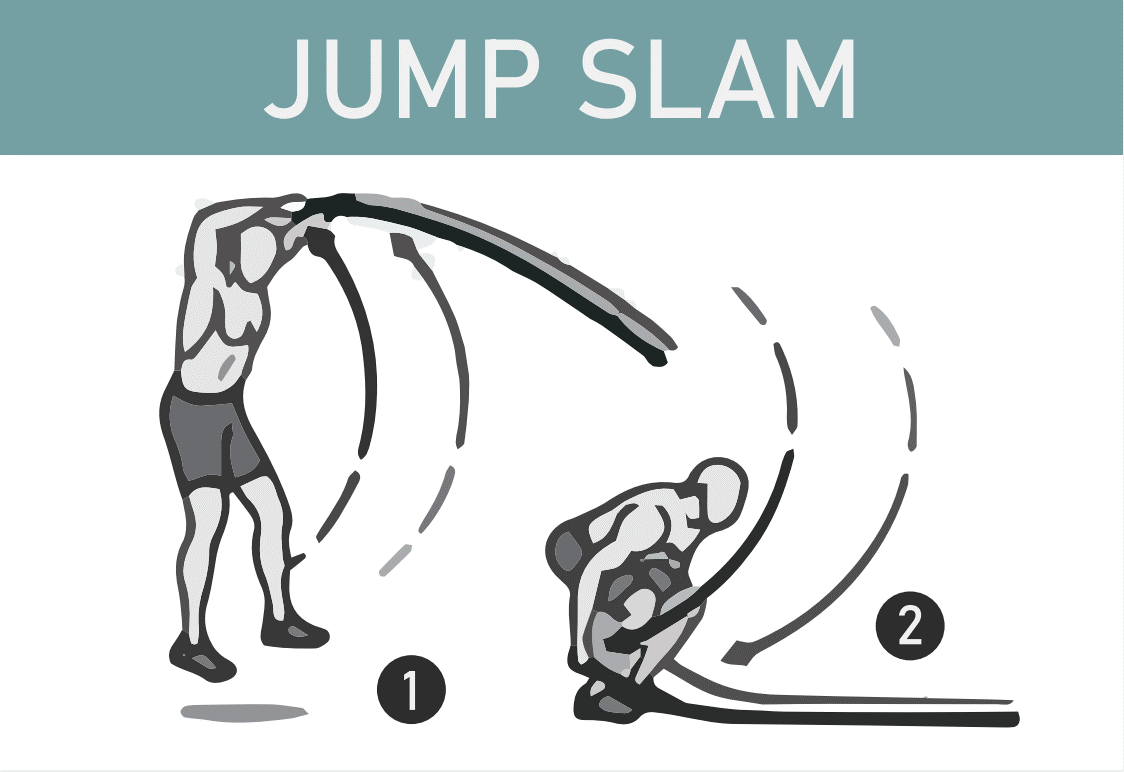
Battle rope jumping slams are a great way to build strength in your legs and burn out your core. They're great for building strength and endurance in your legs, but they also work your core and back muscles.
Muscles worked
Abs
Shoulders
upper back
Core
How to do it?
To start, stand in front of your battle rope with your feet shoulder-width apart, facing the rope.
Hold the battle rope in both hands and get into a squatting position.
Raising your hands overhead, jump high into the air.
It's important to keep your core tight so that you don't land on your tailbone or injure your back.
Once you have landed in a squat, smash the ropes forcefully onto the floor in a wave motion
Difficulty: Intermediate
Impact: High
Beginner regression: Remove the jump and perform a standard rope slam with a shallow squat to reduce joint impact.
#2 – Jumping Jacks
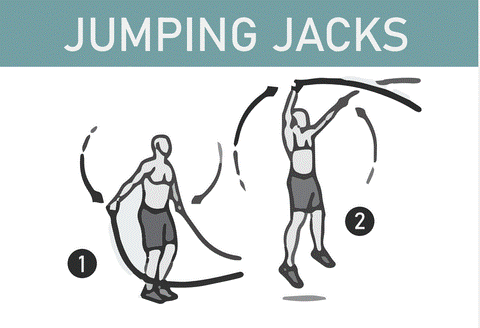
Battle rope jumping jacks is a great way to get your heart rate up. These simple movements will help you burn calories and improve your endurance. This is a great workout for beginners, especially if you're just starting out with battle ropes.
Muscles worked
Calves
Shoulders
Quadriceps
How to do it?
Start in a standing position with feet together and hands at your sides.
With your palms facing each other, hold the battle ropes with a side grip.
Lift your arms to shoulder height as you jump a little wider than shoulder-width apart. Make sure your elbows are slightly bent while keeping your arms straight. Utilize the momentum of the continuous jumps to lift the ropes high!
As you jump inwards, bring your feet together again and slam the ropes down to your sides.
Repeat this motion for 30 seconds or more, depending on how much time you have available or how motivated you feel!
Difficulty: Beginner–Intermediate
Impact: Moderate–High
Beginner regression: Step your feet out and in instead of jumping to make the movement lower impact while still driving your heart rate up.
#3 – Snakes
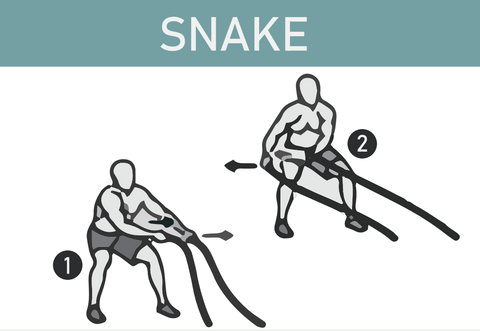
Battle rope snakes is a great gym workout exercise that targets your abs, shoulders, upper back and lower traps. It also involves biceps and forearms and quadriceps.
Muscles worked
Quadriceps
Shoulders
Forearms
Biceps
How to do it?
Hold the battle rope in each hand. Slightly bend the knees and maintain a tight core.
While maintaining your hands at core level, start the movement by bringing the ropes out to the respective sides. The right side of the rope will go to the right side while the left rope will go to the left side.
In the next step, bring the ropes towards one another and immediately back out.
The movement will be similar to a slithering snake.
Continue performing this movement multiple times.
Difficulty: Beginner
Impact: Low–Moderate
Form tip: Keep your shoulders relaxed and down instead of shrugging toward your ears to protect your neck.
#4 – Russian Twist Wave
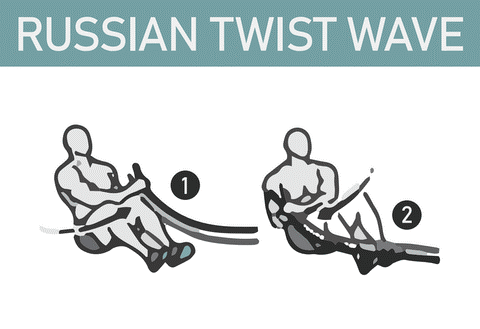
Battle rope Russian twist wave is the best rope workout for your core. It builds strength in your obliques and lower back muscles.
Muscles worked
Obliques
Abs
How to do it?
Put yourself in a seated position on a mat or floor.
Position yourself in an upright position facing the ropes. The back of your body should be slightly tilted backward while sitting straight. Using this technique will help you engage your core. Avoid touching your ears with your shoulders. Keep them back and down away from ears.
Maintain a slight bend in your knees while keeping your heels grounded. Place the battle ropes close together at the midline of your body.
While looking ahead, slam the ropes to both sides of your body while keeping your arms extended, and elbows slightly bent. Control the movement by rotating your torso just a bit.
Difficulty: Beginner–Intermediate
Impact: Low
Beginner regression: Keep your torso more upright and shorten the range of rotation if you feel strain in your lower back.
#5 – Plank Waves
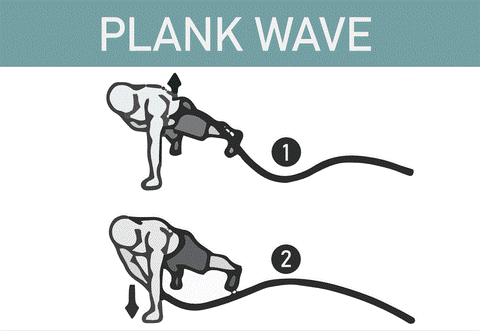
The plank waves battle rope workout is a simple but effective way to strengthen the deep muscles of your core. It activates all your upper body muscles as the rope moves up and down. It's hard to believe that just one battle rope workout can make such a big difference, but it really does! Try it out - you'll be amazed at how much stronger you feel in just a few sessions.
Muscles worked
Core muscles (rectus abdominis & internal and external obliques)
How to do it?
Start in a high plank position, hands directly under your shoulders and resting on the ground.
Straighten your back and engage your core.
Grasp the battle rope with one hand. Take a side grip on it. Pull your belly button into your spine and slightly protract your shoulder blades prior to starting. Maintain a square posture at the hips and shoulders.
While keeping your arm straight and your elbow slightly bent, start whipping your rope up and down to create a lateral wave. Avoid wiggles in your hips by squeezing your glutes and engaging your core.
This movement must be constant throughout the exercise.
Difficulty: Intermediate
Impact: Low–Moderate
Beginner regression: Drop your knees to the floor for a modified plank while you create smaller, controlled waves.
#6 – Alternating Waves
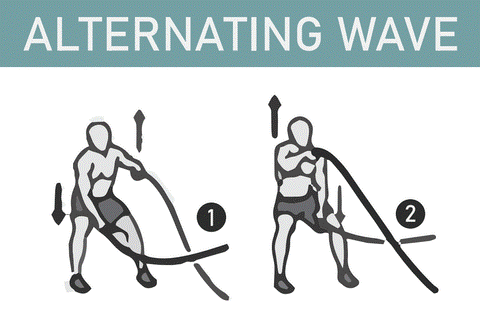
This battle rope workout is perfect for people who want to get a full-body workout in a short amount of time. It mainly targets your shoulders while also challenging your arms and core. The alternating waves workout helps build muscle!
Muscles worked
shoulder
arms
upper back
How to do it?
Maintain an elevated hip position while bending your knees.
Ensure that the back is straight and the chest is elevated.
As you hold one end of the battle rope in each hand, extend your arms forward while maintaining a slight bend in your elbows.
As you begin, lift your left hand and lower your right hand.
Now lower the left hand and then simultaneously raise the right hand. Keep the core tight as you repeat this back-and-forth motion.
Difficulty: Beginner
Impact: Low–Moderate
Coaching cue: Think of “quick, snappy waves” rather than huge, heavy ones to maintain good posture and breathing.
#7 – Figure 8
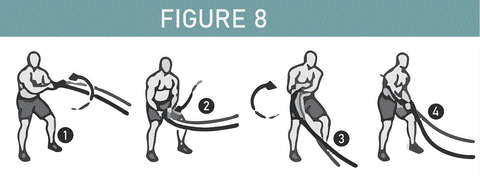
It's a great way to target obliques without having to do any crunches or sit-ups. Try it out!
Muscles worked
Core
Shoulder muscles
How to do it?
Keeping your core tight, bring both hands across your body on the left side and down.
Moving arms across your body, move the battle ropes upward and then down to your right side.
In the same manner, raise the ropes, and slam down to the left.
Consider drawing an infinity sign using the ropes.
Difficulty: Beginner–Intermediate
Impact: Low–Moderate
Beginner tip: Slow the movement down at first and focus on tracing a smooth “∞” shape before increasing speed.
#8 – Sidewinders Walk
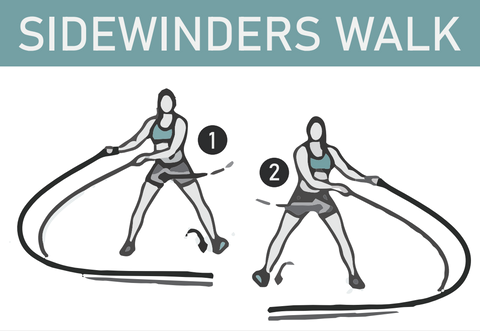
Sidewinders walk is the best battle rope workout if you want to build upper body and core strength. This battle rope workout is also known as side-to-side waves and targets your entire body.
Muscles worked
Abdominals
Shoulders
Lower back
Arms
How to do it?
To start this battle rope workout, swivel your hips side to side. The idea is to keep your transverse abdominis activated to stabilize the core.
Swing the rope across the floor from left to right just like you were sweeping the floor
Make sure your toes are firmly planted onto the ground while allowing your heels to raise and lower slightly
Difficulty: Beginner–Intermediate
Impact: Low–Moderate
Progression: Once you’re comfortable, add a slow lateral walk to the left and right while maintaining smooth side-to-side waves.
#9 – Reverse Lunge Wave
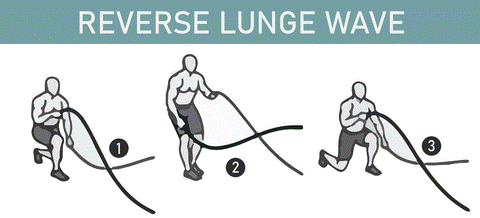
The reverse lunge waves is a high impact battle rope workout that will help you get your heart rate up and burn calories. It is a great way to build strength in the shoulders, arms, and core.
Muscles worked
Shoulders
Arms
Core
Lower body muscles
How to do it?
Hold a rope in each hand with the ends held firmly between your palms.
Perform alternate waves with your battle ropes as you step back into a reverse lunge.
Return to standing, but keep your arms moving as you step into a reverse lunge on the opposite leg.
Repeat for reps as needed.
Difficulty: Intermediate
Impact: Moderate–High
Beginner regression: Keep your feet in a stationary split stance instead of stepping back each time to reduce balance demands.
#10 – Rope Slam
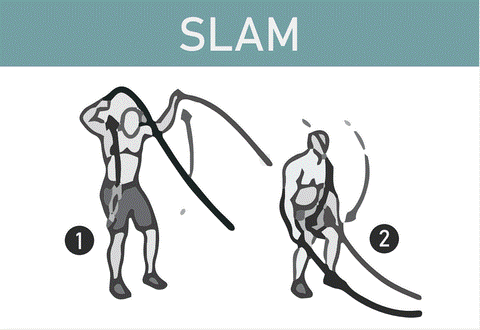
The battle rope slams help to build up your upper body strength. It helps to make your shoulders, arms, and chest stronger. Another benefit of this battle rope workout is that you will also be able to improve your endurance as well as your cardiorespiratory fitness.
Muscles worked
Shoulders
Biceps
Triceps
Lats
How to do it?
Hold battle ropes with palms facing inward, while standing feet shoulder width apart.
Swing rope high above your head, then slam down into a high squat while using explosive movements.
The rope should be above your ears at its high point and below your knees at its low point.
Difficulty: Beginner–Intermediate
Impact: Moderate–High
Form tip: Drive the movement from your hips and core, not just your arms, to protect your shoulders and generate more power.
Beginner Battle Rope Workout Plan (10–15 Minutes)
Now that you know the key movements, here’s a simple plug-and-play plan you can follow 2–3 times per week.
Phase 1: 10-Minute Starter Routine (Weeks 1–2)
Choose the following four moves:
Alternating Waves (#6)
Battle Rope Snakes (#3)
Sidewinders Walk (#8)
Rope Slam (#10, non-jumping version)
Workout structure:
Work: 20 seconds
Rest: 40 seconds
Perform each exercise once, then repeat the circuit 3 times (total ~10 minutes).
Focus on smooth waves, controlled breathing through your nose and mouth, and finishing each round with good technique.
Phase 2: 12–15 Minute Progression (Weeks 3–4)
Add one or two more challenging moves:
Jumping Jacks (#2 – stepped version if needed)
Reverse Lunge Wave (#9)
Plank Waves (#5, knees down if needed)
Workout structure:
Work: 25–30 seconds
Rest: 30–35 seconds
Perform 5–6 exercises in a circuit, 2–3 total rounds (12–15 minutes).
As you adapt, you can:
Increase work time to 30–40 seconds
Shorten rest to 20–30 seconds
Add a 5-minute cooldown of walking and light stretching
Use a simple effort scale from 1 to 10 (RPE). Aim for RPE 6–7 as a beginner: challenging but sustainable, where you can still speak short sentences.
How Long Should A Battle Rope Workout Be?
The most common duration used by fitness experts is 10-15 minutes. It's important to remember that how long you do the exercise is less important than how hard you push yourself during those 10-15 minutes.
You may not be able to handle a 10-minute workout initially, but that's ok. You can start with a 5-minute workout and eventually extend it to 10 minutes.
Researchers found in a study that a 10-minute battle rope workout results in increased heart rates and energy expenditure (calorie burn) that met previously established thresholds for improving cardiorespiratory fitness[2].
Summary
Battle rope workouts elevate heart rate and improve athletic performance. They're ideal for beginners or people new to the battle rope, but they're also effective for more advanced athletes looking to improve their coordination and focus.
Battle rope workouts also help build muscle in the arms, shoulders, and core. The key to the battle rope workout is consistency and form. When you're finished with each exercise, rest for 30 seconds before continuing with the next one.
Start with basic patterns like alternating waves, snakes, and rope slams, then gradually layer in more complex moves such as reverse lunge waves and plank waves as your control and conditioning improve.
FAQ: Battle Rope Training for Beginners
Q1: Are battle ropes good for weight loss?
Yes. Battle ropes burn a lot of calories in a short time and raise your heart rate, which supports fat loss when combined with a calorie-controlled diet.
Q2: Can complete beginners use battle ropes safely?
Absolutely. Start with shorter intervals and low-impact variations (no jumping), and focus on good posture and controlled waves.
Q3: Can I do battle ropes every day?
Most beginners do best with 2–3 rope sessions per week. Daily high-intensity sessions can lead to fatigue or overuse issues.
Q4: Will battle ropes build muscle or just cardio?
They primarily improve conditioning, but they also develop your shoulders, arms, upper back, and core, especially when used consistently.
Q5: What should I feel during a rope workout?
You should feel your heart rate up, your breathing faster, and your muscles burning, but not sharp joint pain or dizziness.
Q6: How should I breathe when using battle ropes?
Use steady, rhythmic breaths; exhale during effort (big slams or fast waves); and avoid holding your breath.
Q7: Are battle ropes hard on the knees?
Most movements are low impact if you avoid excessive jumping. Keep a soft knee bend and choose regressions if you have knee issues.
Q8: Can I combine battle ropes with strength training?
Yes. Many people lift weights first and then finish with 5–10 minutes of rope intervals for conditioning.
Q9: What if my hands get tired before the rest of my body?
Use a lighter rope (1.5″ diameter), shorten your intervals, or mix in moves that give your grip a brief break, like Russian twist waves.