

How to do Pushups
Pushups are one of the most effective bodyweight exercises. They’re accessible to beginners because they require no equipment and can be done almost anywhere. They build strength across the chest, shoulders, triceps, and core. Learning how to do pushups correctly can set the foundation for upper-body strength, muscle stability, and overall endurance.
Mastering proper pushup technique offers more than just strength gains. It promotes correct body alignment, injury prevention, and full-body coordination.
Here are a few key benefits of pushups:
Protects joints by reinforcing correct movement patterns.
Improves full-body stability and core control.
Builds a base for progressing to other upper-body and core exercises.
Lowers the risk of injury when transitioning to more advanced movements.
Disclaimer: If you’re managing joint pain, recovering from injury, or dealing with medical concerns, always consult a healthcare provider or certified trainer before adding new pushup variations or strength exercises to your routine.
Understanding the Basics of Pushups
Pushups fall under the category of bodyweight training or calisthenics, an approach focused on building strength and control using gravity and your own mass as resistance. The weight of the body provides the resistance, while proper technique helps target the correct muscles.
Additionally, a pushup is also considered a compound exercise because it engages multiple major muscle groups at once. Here’s a breakdown of the muscles worked during a standard pushup:
Chest (pectorals): Drives the pushing motion and helps bring the arms inward.
Shoulders (deltoids): Stabilize the shoulder joint and assist in pressing upward.
Triceps: Extend the elbows to complete the push portion of the movement.
Core: Maintains a straight spine and resists sagging at the hips or lower back.
Glutes: Help keep the body aligned and support overall stability.
Understanding how these muscles work together is essential to mastering proper pushup technique. Once you’ve mastered the basics, you can progress to more advanced variations that challenge your strength and coordination. All advanced push-ups still use most of the techniques you’ll learn as you master a basic push-up!
Proper Pushup Form: A Step-by-Step Guide
Learning the correct pushup form builds strength efficiently by helping target the right muscles. Proper technique also helps reduce the risk of injury, as the wrists and shoulders are particularly susceptible to injury when performing pushups.
Here are a few steps to help you learn the correct pushup form:
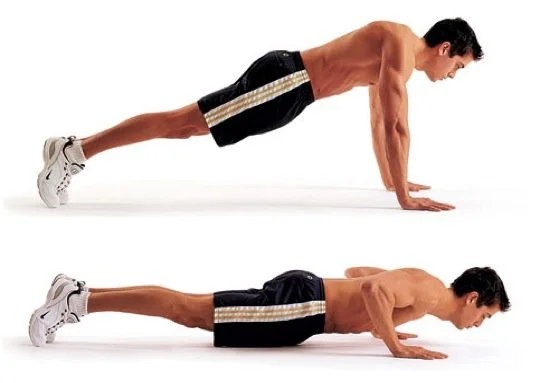
Start in a high plank position. Place your hands shoulder-width apart and extend your elbows. Keep spine neutral and legs straight behind you and plant toes firmly onto the floor.
Engage your core and glutes. Brace your abdominal muscles and squeeze glutes to keep the body in a straight line from head to heels.
Align your head and spine. Keep the neck in a neutral position with the chin slightly tucked. Avoid looking straight down or tilting the head upward.
Lower your body with control. Bend elbows at about a 45-degree angle, keeping them close to the body. Lower until your chest is just above the ground.
Push back to the starting position. Drive through your palms to straighten your arms. Brace your core and keep the body aligned from head to heels as you return to a high plank position.
Modified Pushups for Beginners
Many beginners can struggle with pushups. Don’t be discouraged. There are pushup variations that offer a safe way to help build strength and refine technique. These pushup modifications reduce the load on the upper body without compromising form—perfect for learning the fundamentals!
If you’re looking to improve gradually, consider practicing with these modified pushups:
Wall Pushup
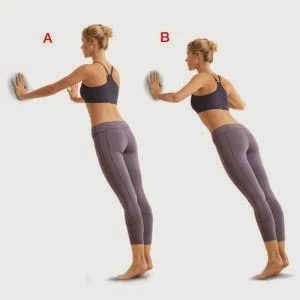
Stand facing a wall with feet hip-width apart. Place hands shoulder-width apart at chest height. Bend the elbows to bring the chest toward the wall, then push back to the starting position.
Why it helps: This is the easiest variation with minimal resistance. Wall pushups are great for learning body alignment and arm position.
Incline Pushup
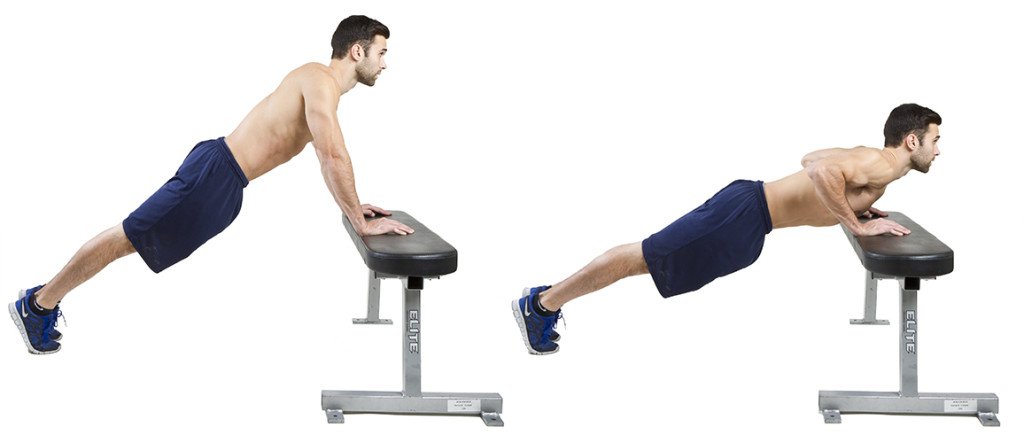
Place your hands on a sturdy elevated surface like a bench or box. Extend your arms to support your weight and step back until your body aligns from head to heels. Brace your core and lower your chest toward the surface, then press back up.
Why it helps: Shifts some bodyweight away from the arms while still targeting the chest, shoulders, and core. This helps strengthen the arms to fully support one’s body weight during a basic push-up.
Knee Pushup
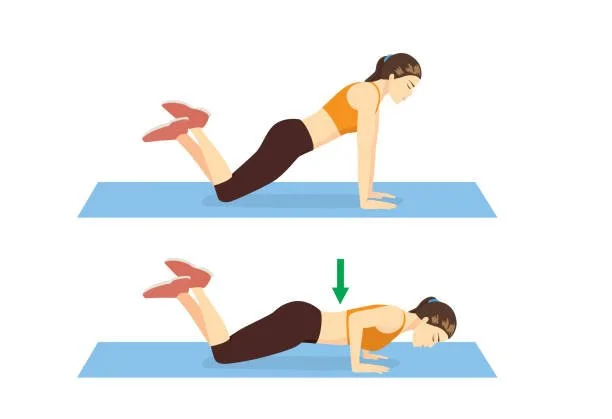
Start in a high plank. Then rest your knees on the floor while maintaining upper body alignment. Brace your core and lower your chest toward the floor, then press back up.
Why it helps: Keeps the body in proper pushup alignment with more resistance than incline pushups. Perfect for locking in form and technique before progressing to standard pushups.
Pushup Variations to Keep It Interesting
Once you’ve nailed the basics, standard pushups can start to feel routine. While doing more reps is one way to challenge yourself, it can get repetitive over time. Pushup variations offer a fun, effective way to increase difficulty, engage new muscles, and keep your workouts interesting.
Additionally, these exercises activate different muscles and can help develop total-body strength and improve body coordination through body awareness or proprioception.
Here are some pushup variations to consider:
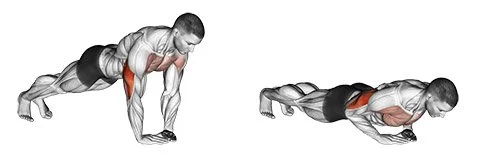
Diamond Pushup
Begin in a high plank and place your hands together, forming a diamond shape with your thumbs and index fingers touching. Lower your chest until your elbows reach a 90-degree bend, then push back up.
Why it helps: Applies greater tension to the chest and triceps, helping further build upper-body strength.
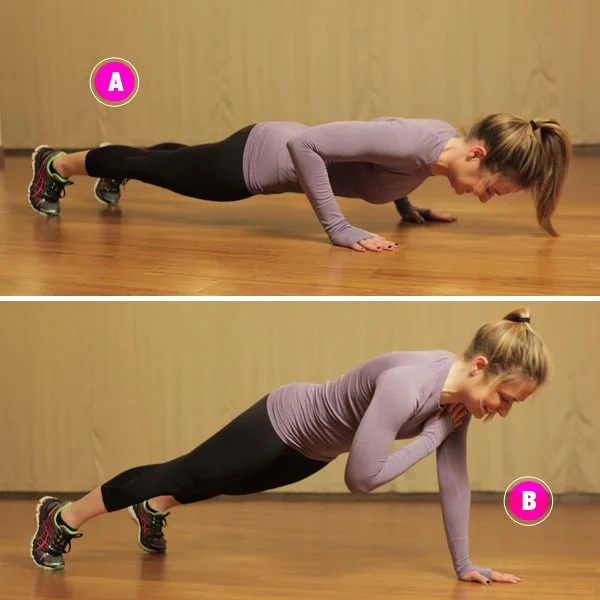
Shoulder Tap Pushup
After completing one standard pushup, tap one shoulder with the opposite hand while maintaining a stable plank. Perform another pushup and tap the other shoulder with the opposite hand.
Why it helps: Builds on standard pushups by adding a momentary shift in balance during the shoulder tap, helping further improve coordination and body stability. This also prepares you for advanced variations like one-arm push-ups.
Negative Pushup
Start in a high plank and lower your chest slowly to the ground over a count of three to five seconds. Return to the starting position and repeat.
Why it helps: Slowed, controlled movement during the lowering phase increases time under tension, making each rep more challenging. This variation can promote muscle growth by engaging muscles for a longer period during the exercise.
Start by rotating up to two pushup variations into your weekly sessions. Alternate with standard pushups or include them in warm-ups or finishers to build more endurance and control without overwhelming the body.
Pushup Progression: From Beginner to Advanced
Progression is important for any program because it turns practice into strength. Without it, you’re bound to eventually hit a fitness plateau. A structured pushup training plan gradually increases difficulty to keep the muscles challenged and promote growth as the body gets stronger.
Generally, when a variation becomes manageable for multiple reps with proper form, it’s time to move up.
Here’s a sample pushup training plan that incorporates all pushup forms presented in this guide:
Wall Pushups: These help build foundational strength and serve as a way to practice basic pushup mechanics with minimal strain on joints.
Incline Pushups: Introduces more bodyweight tension and encourages a greater range of motion while maintaining form.
Knee Pushups: Builds upper-body strength in preparation for floor-based/standard pushups.
Standard Pushups: Combines core control, upper-body strength, and proper form into a complete bodyweight movement.
Negative Pushups: Improves muscle control and prolongs muscle activation during the lowering phase of a standard pushup.
Wide-Grip Pushups: Targets the chest more intensely with a wider hand position and further builds upper-body strength.
Shoulder Tap Pushups: Builds stability, coordination, and core control while reinforcing upper-body balance. Shoulder Tap Pushups also help beginners train for advanced variations like single-arm pushups.
As a general milestone, you’re ready to move onto the next progression once you can consistently perform a pushup variation for 3 sets of 8–10 reps with correct form or as your trainer recommends.
Incorporating Pushups into Your Workout Routine
Pushups are one of the most versatile exercises out there—and they’re easy to slot into almost any fitness program. Depending on your fitness goal, pushups can serve as a warm-up, a finisher, or a primary bodyweight movement. They also pair well with cardio and resistance training.
For optimal results, make sure to match the volume and difficulty of the pushup to your current fitness level. Here’s how pushups can be incorporated based on experience level:
Beginner (2–3 days per week): Combine wall pushups, incline pushups, or knee pushups with light cardio and mobility work.
Intermediate (3–4 days per week): Pair standard pushups, wide-grip pushups, or shoulder tap pushups with bodyweight squats, lunges, and core exercises.
Advanced (4–5 days per week): Mix a standard pushup + variation superset into circuit or strength-focused training sessions to push endurance and muscle development.